
Free Collaboration Proposal Template for Easy Partnerships

If you run a growing business, collaboration is no longer optional. Most companies partner to grow faster, but without a clear proposal, collaborations often turn messy, slow, or fail altogether.
Many businesses hire lawyers to draft proposals, which is expensive, time-consuming, and unnecessary for most collaborations. What you really need is a clear, professional proposal that aligns goals, defines responsibilities, and builds trust from the start.
That is why we offer a free collaboration proposal template. It is simple, practical, and designed to help businesses collaborate with clarity and confidence, without legal complexity.
Below, we’ll show you exactly how to use it and what to include.
Key Takeaways
Download Your Free Collaboration Proposal Template
Use our free template to streamline your partnership planning and start your collaboration with clarity and confidence.
What Is a Collaboration Proposal?
A collaboration proposal is a formal document that aligns two businesses or brands to work toward a common goal.
It sets clear expectations, defines roles, and outlines shared objectives. Think of it as a blueprint for success, where both parties agree on how they’ll contribute to the partnership.
This proposal isn’t just about business terms; it’s about building trust and transparency. By clearly laying out what each party brings to the table, it ensures that both sides benefit and work together effectively.
In short, a collaboration proposal is the foundation of a successful partnership, built on mutual understanding and shared goals.
Benefits of Using a Template for a Collaboration Proposal
Using a collaboration proposal template offers clear, practical benefits for any business.
1. Saves Time
A template provides a ready-made structure, so you don’t have to start from scratch every time. You can focus on the specifics of the partnership, making the proposal process faster and more efficient.
2. Professional Appearance
A well-organized template ensures your proposal looks clean and professional. This builds credibility and shows your potential partners that you take the collaboration seriously.
3. Consistency
By using the same template for all proposals, you ensure consistency in how your business is presented. It helps maintain your brand’s voice and ensures that all important points are covered each time.
4. Clarity and Protection
A clear proposal sets defined expectations and roles, minimizing the risk of misunderstandings. It protects both parties by outlining agreed-upon terms and responsibilities, giving both sides peace of mind.
How to Write a Collaboration Proposal Template
When you are closing a collaboration deal, the first things to focus on are safety, trust, responsibility, and shared goals. A strong proposal helps both sides feel confident and clearly aligned before moving forward.
There are generally two ways to handle collaboration proposals.
The first method is hiring a lawyer and arranging formal meetings to discuss every detail. While this approach offers legal security, it often takes time and comes with high costs. Legal fees, revisions, and consultations can be expensive, especially for new businesses ,influencer and brand collaborations.
The second method is using a ready made collaboration proposal template. This approach is simpler, faster, and more cost effective. You select a free template, fill in real and accurate information, clearly explain your value, pricing, roles, and expectations, then review everything carefully before sending it to the client for approval and signature.
The key is not just using a template, but optimizing it. You adjust the content to match your collaboration goals, policies, and agreements so both parties feel comfortable and protected.
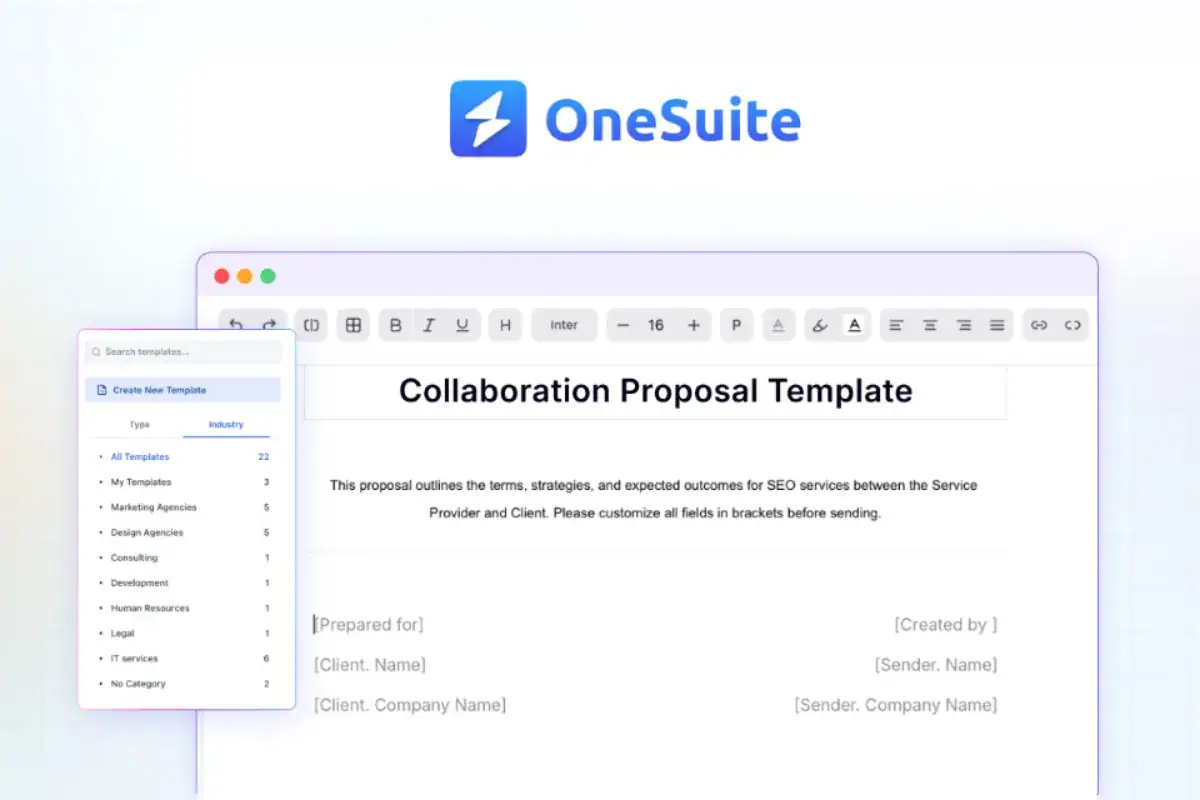
Tools like OneSuite make this process easy…..
You can customize templates, add e-signatures, send proposals professionally, and follow up without extra charges or complexity.
Everything stays organized in one place…..👍
If you are unsure what to include or how to structure your proposal, the next sections will guide you step by step.
They explain exactly what should be included in a collaboration proposal so your next partnership starts with clarity and ends successfully.
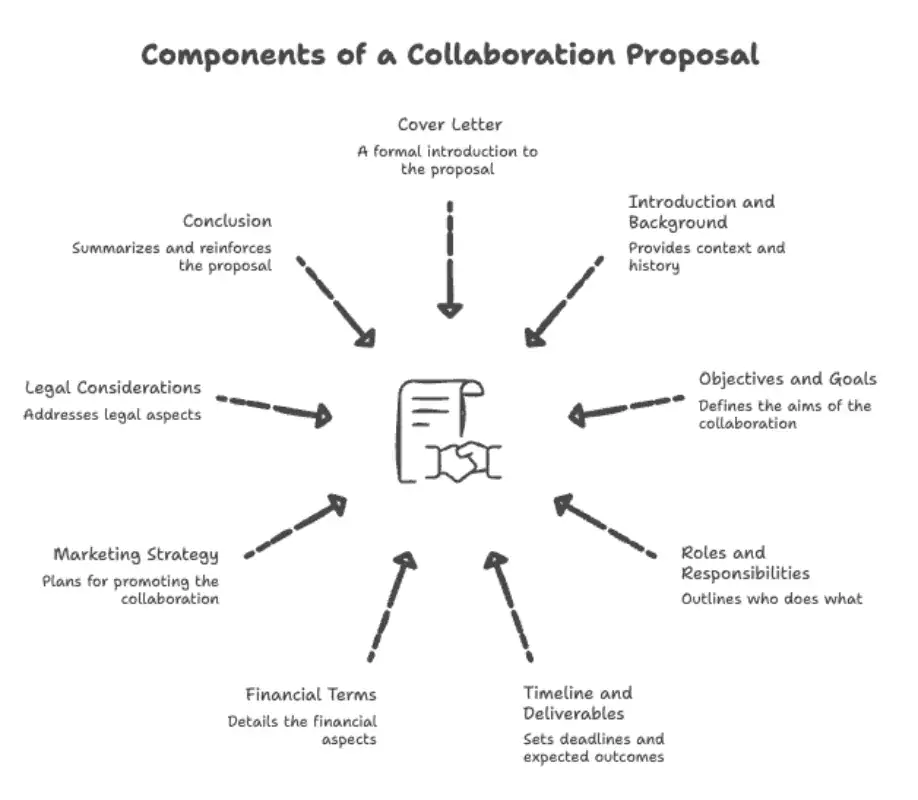
Key Components of a Collaboration Proposal for Business
Before you use any collaboration proposal template, you should always check whether it includes the right core sections. A good template doesn’t look fancy, it communicates clearly.
Below are the first two and most important parts every collaboration proposal must have.
1. Cover Letter
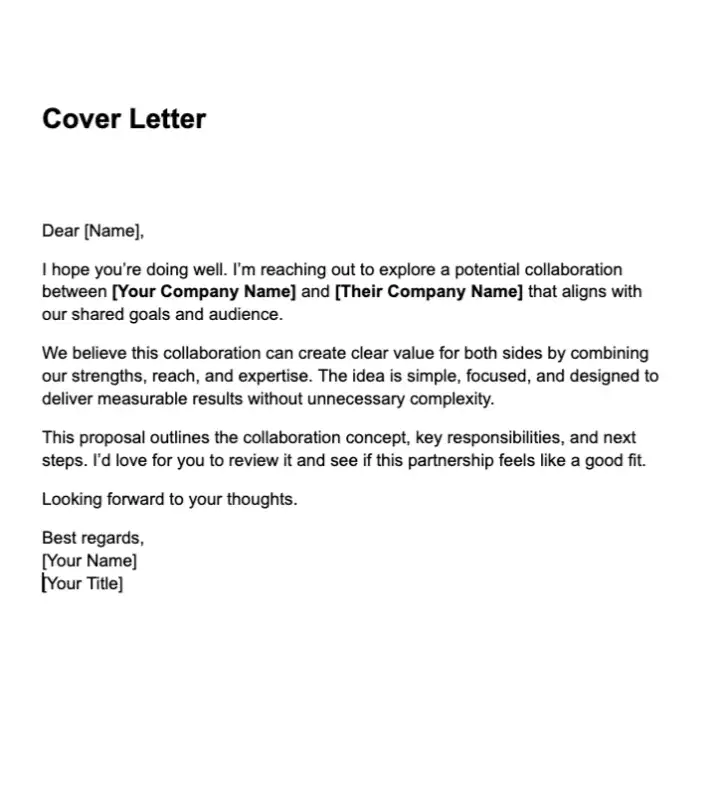
The cover letter is the first impression. This is where most people decide whether to keep reading or not.
Keep it short. Keep it focused.
A strong cover letter should:
- Clearly state why you’re reaching out
- Briefly explain what the collaboration is about
- Highlight the value for the other business
- Set a professional but friendly tone
You don’t need long explanations or marketing language here. Just the key points. Think of it as a summary that invites the reader to continue.
If the cover letter feels confusing or overloaded, the proposal already loses impact.
2. Introduction and Background
This section explains the context of the collaboration.
Here, you answer three simple questions:
- Who are you?
- Why are you proposing this collaboration?
- What problem or opportunity does this partnership address?
This is where you briefly introduce both businesses and explain how the idea came up, maybe from a shared audience, a market gap, or a common goal. You can also mention the challenge you noticed and how collaboration creates a better solution than working alone.
The goal isn’t to sell aggressively.
The goal is to make the collaboration make sense.
When this section is written well, the reader understands:
- Why the collaboration exists
- Why now is the right time
- Why you’re the right partner
Clear background builds trust. And trust is what moves a proposal forward.
3. Objectives and Goals
This section explains why the collaboration is happening and what both sides agreed to achieve. It should reflect the discussion after your meeting, what was promised, what was offered, and what the collaboration is expected to deliver.
Clear objectives keep the partnership focused and make success easy to measure. When goals are written properly, there’s no confusion later.
4. Roles and Responsibilities
This section explains how the collaboration will work in practice. It defines who is involved, what each party is responsible for, and which tools, assets, or resources will be used.
Clear roles prevent confusion, avoid overlap, and keep everyone accountable. When responsibilities are defined upfront, collaboration runs smoothly.
5. Timeline and Deliverables
This section explains when the work will happen and what will be delivered at each stage of the collaboration. It should include clear milestones, realistic deadlines, and specific deliverables agreed during the discussion. Adding proper dates helps both parties track progress and stay accountable.
When timelines and deliverables are clearly defined, the project stays organized and delays are avoided.
6. Financial Terms
This section explains the financial side of the collaboration. It should clearly state the agreed pricing, payment method, budget limits, or revenue-sharing model. Everything related to money must be direct and specific.
Clear financial terms prevent confusion, avoid future disputes, and ensure both parties are comfortable moving forward. When payment details are written properly, the partnership begins with trust and clarity.
7. Marketing Strategy
This section defines how the collaboration will be promoted in real terms. It should clearly state where the collaboration will appear, what type of content will be created, and how both brands will support each other’s visibility.
This may include social media promotion, content sharing, campaign timing, branding placement, or cross-promotion plans.
A strong marketing strategy ensures both brands are aligned, audiences are reached effectively, and the collaboration delivers measurable exposure, not just activity.
8. Legal Considerations
This section outlines the rules that protect both parties. It should cover confidentiality, ownership of content and assets, usage rights, and any limitations agreed upon.
This is where boundaries are clearly set, what can be shared, what cannot, and who owns what during and after the collaboration.
Addressing legal terms upfront prevents disputes and keeps the partnership professional, secure, and clear from day one.
8. End with a Strong Conclusion
The conclusion brings everything together. This is where you briefly review the collaboration, confirm mutual agreement, and clearly state the next steps.
It should guide the reader toward action, whether that’s approval, feedback, or signing the document. A strong conclusion removes hesitation and makes it easy to move forward.
At this stage, the proposal should be ready for e-signature and final approval.
Reading our document hub, OneSuite helps streamline this process by offering customizable templates, built-in e-signatures, secure sharing, and follow-up tools in one place. This ensures the proposal doesn’t stall and the collaboration moves smoothly toward closing.
A clear ending turns a proposal into a partnership.
💡See Also: How to Write an Influencer Marketing Proposal
Create, Send, and Sign Collaboration Proposals Using OneSuite
You already know how to write, structure, and optimize a strong collaboration proposal. The next step is taking action and turning that proposal into a signed agreement. That’s where OneSuite makes the process simple.
With OneSuite, you don’t need to hire a lawyer or struggle with complex tools. The templates are easy to use, fully editable, and designed to match your brand. You can apply your branding colors, adjust the tone, and fill in real collaboration details without stress.
Everything is built to help you move faster, from proposal creation to final approval.
How to Use Our Collaboration Proposal Template
Follow these simple steps to create and close your collaboration proposal:
- Select a template
Choose a collaboration proposal template that fits your business or influencer partnership. - Fill in the gaps
Add your information, pricing, timeline, and collaboration terms where indicated. - Send for e-signature
Share the proposal with your partner and request an electronic signature directly through OneSuite. - Follow up and confirm
Use follow-up emails or reminders to confirm approval and move forward.
Once your proposal is sent, all that’s left is to wait for confirmation and begin your next win–win collaboration. OneSuite helps you stay organized, professional, and ready to close partnerships with confidence.
Find a Better Way to Grow
OneSuite streamlines projects, clients, and payments in one place, making growth hassle-free.