
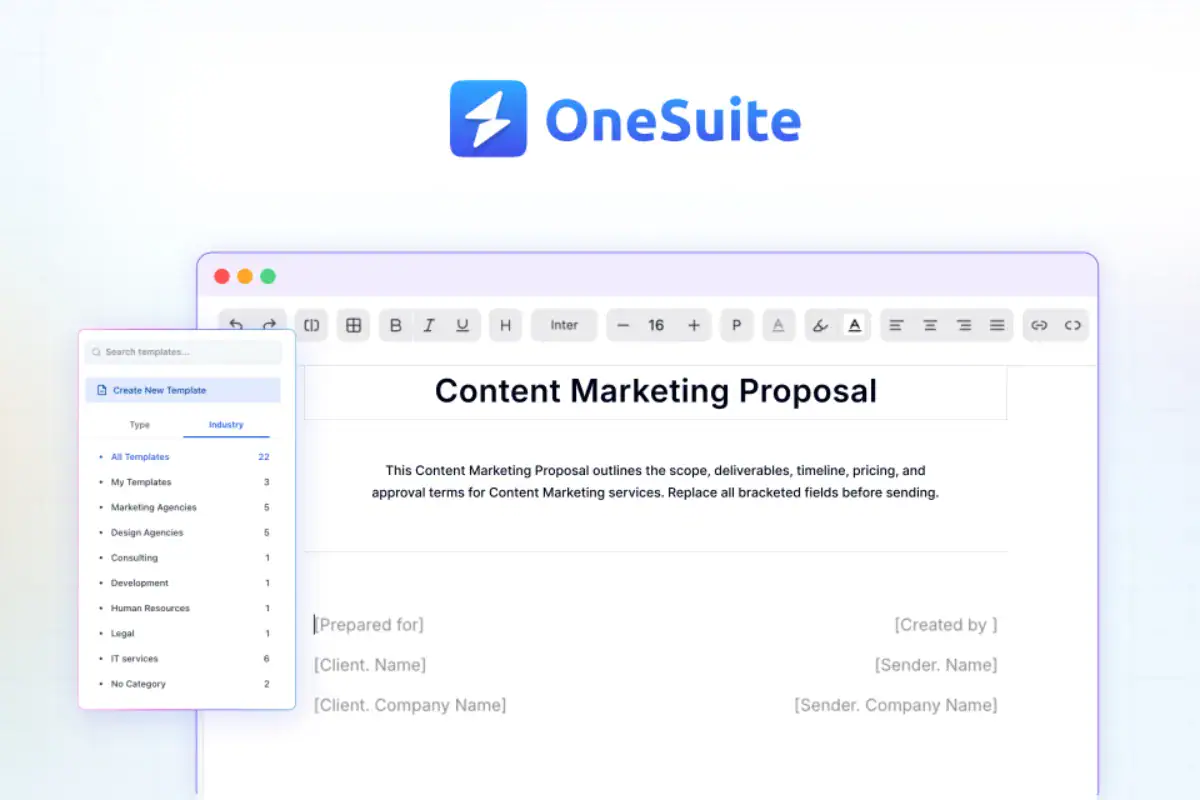
Free Content marketing proposal template

Every marketer or agency owner has been there. A project starts with excitement, but soon questions pop up
-“When will this be delivered?” “Was this included?” “What about payment terms?”
Most of these problems don’t happen because of bad work. They happen because things weren’t clearly written from the start.
That’s where a strong content marketing proposal template makes a difference. It helps you set clear expectations before the work begins. You define the scope, timeline, deliverables, and payment terms upfront. No confusion. No awkward conversations later.
When your onboarding process is structured and professional, clients feel confident. You feel protected. And the whole project runs smoother from day one.
Try to free content marketing proposal template
What is a content marketing proposal?
A content marketing proposal is a clear document that aligns the client’s marketing goals with their ideal customer profile (ICP) and a tailored content plan. This alignment is crucial because it ensures that your content strategy is directly tied to the client’s business objectives.
By including both in your proposal, you provide a proper guideline that helps clients understand how your strategy will achieve their goals.
Why is this important for daily client delivery?
First, it ensures that both parties are on the same page with clear goals, timelines, budgets, and expectations.
A well-crafted proposal prevents misunderstandings and avoids difficult issues related to delivery, payment, and onboarding.
It builds trust, maintains brand value, and sets the foundation for a successful partnership, ultimately leading to future projects without losing credibility.
What to include in your content marketing proposal
When onboarding a new client as a freelancer or marketing agency owner, creating a well-structured content marketing proposal is crucial to set the right expectations and build trust.
A content marketing proposal serves as a blueprint that outlines the strategies, goals, and solutions you’ll implement to help the client achieve success. It not only addresses their specific challenges but also demonstrates your expertise in crafting a tailored approach.
In this section, we’ll explore the key elements that should be included in your proposal to ensure it aligns with your client’s objectives and sets the foundation for a successful partnership.
Cover Page
When presenting your content marketing proposal to a client, the cover page is your first opportunity to make a lasting impression. It’s essential to design a cover page that is not only professional but also tailored to the specific needs of your client’s industry. A visually appealing, niche-relevant cover page will help set the tone for the entire proposal.
Here’s what to include:
- Client Name: Clearly highlight the client’s name or business.
- Project Name: A succinct title that captures the essence of the project.
- Your Branding: Include your logo, company name, and contact details to make it clear who the proposal is coming from.
- Date: The date of the proposal to ensure timeliness.
- Tagline: Consider adding a brief tagline that hints at the value your content marketing will bring.
Project Overview
The project overview should be concise yet comprehensive, summarizing the core aspects of the project. This is the section where you provide context for the proposal, following your initial conversation with the client. It’s important to tie back to the client’s business needs, challenges, and goals.
Here’s how to break it down:
- Client’s Marketing Channels: Mention the key marketing channels discussed, such as social media, SEO, email marketing, or content marketing.
- Objectives: Describe what the client aims to achieve (e.g., lead generation, traffic increase, brand awareness).
- Solutions: Briefly mention how you plan to address the client’s goals through your content marketing efforts.
Client’s Problem
In this section, you demonstrate that you truly understand the client’s challenges. By restating their main pain points, you build credibility and show that you are aligned with their needs. Be specific about their current issues and position yourself as the solution provider.
Here’s how you might frame it:
- Challenge Summary: Rephrase the challenges discussed in your initial meeting (e.g., “Client struggles with low organic traffic and poor engagement on social media”).
- Root Causes: Highlight the key factors contributing to the problem (e.g., “Limited content variety, outdated SEO strategies, and inconsistent posting schedules”).
- Impact on Business: Link the challenges to real business consequences (e.g., “These issues are preventing the business from reaching its target audience and generating consistent leads”).
Client’s Solutions
Now, transition from the problem to the solution. Here, you get to showcase your expertise and explain how you will solve the client’s challenges. This is where your content marketing knowledge shines. You’ll demonstrate how your strategies will turn their problems into opportunities for growth.
Structure this section like so:
- Content Research: Explain how you’ll conduct thorough research into their industry, competitors, and target audience. Mention keyword research, content mapping, and any tools you’ll use to gather insights.
- Topic Mapping: Show how you’ll identify key topics relevant to their business and customer base, ensuring the content resonates and drives engagement.
Content Marketing Strategy
When crafting a content marketing proposal, the Content Marketing Strategy is the heart of your plan. This is where you align your approach with the client’s business objectives and ensure your content will generate results.
To build an effective strategy, it’s important to deeply understand the client’s business and target audience.
You should tailor your strategy to their needs, whether it’s through SEO-optimized blog posts, AEO-driven videos, or engaging social media content.
By offering a comprehensive plan, you can outline how each content type, blog posts, videos, social media updates, will be created and distributed to meet the client’s goals, from lead generation to brand awareness.
Be sure to include how these content types integrate into their existing channels and work towards achieving their specific marketing goals.
Timeline and Delivery
The Timeline and Delivery section sets clear expectations on when the client can expect results. It’s vital to establish a realistic timeline for content creation, approval, and publication.
A detailed timeline should include key milestones, such as initial content drafts, review cycles, and final deliveries.
Additionally, it’s crucial to outline how often the client will receive updates, whether weekly or monthly, so they can stay informed about the progress.
For example, specify how many pieces of content will be delivered per month, whether it’s blog articles, social media posts, or videos. This section ensures there’s no ambiguity about deadlines and task deliverables, and helps both you and the client stay on track for a smooth, timely execution of the content plan.
By clearly defining how much content will be produced and when it will be delivered, you set both parties up for success with an organized and transparent process.
Key Metrics for Success
We’ll track key metrics such as website traffic, lead generation, social media engagement, video performance, SEO rankings, email engagement, and conversion rates to measure the success of our content marketing strategy and ensure alignment with your business goals. These metrics will help us optimize content for the best possible results.
Pricing
Our pricing structure is designed to be transparent and aligned with the scope of your project. Each service is priced based on the level of work and the resources required to achieve your goals. We offer flexible packages to accommodate different needs, whether it’s a one-time project or an ongoing content marketing strategy.
- Project-Based Pricing: Ideal for one-off content pieces like blog posts, videos, or landing pages.
- Monthly Retainer: A fixed monthly fee for ongoing content creation, SEO, social media management, and more.
- Custom Packages: Tailored solutions for larger projects or long-term content marketing campaigns.
We believe in clear communication and no hidden fees, ensuring that you understand exactly what you’re paying for. If you have any specific budget concerns, we’re happy to discuss and find a solution that works best for you.
Call to actions
Now that we’ve outlined the entire content marketing strategy, it’s time to move forward. We’re excited to work with you and help achieve your business goals through powerful content.
To proceed, simply review the proposal, and once you’re ready, sign the contract using our e-signature feature for a seamless, paperless experience.
You can also review the payment options outlined in the proposal, and once the contract is signed, we’ll begin work as agreed.
If you have any questions or need adjustments, feel free to reach out. We’re here to ensure everything is clear and to your satisfaction.
Let’s make this partnership a success!
Easily Use OneSuite for Your Content Marketing Proposal
OneSuite’s Content Marketing Proposal Template makes creating, customizing, and sending professional proposals quick and easy. With an intuitive electronic document workflow, you can streamline your proposal process and focus on what matters—winning your next client.
Here’s how to easily create and send your content marketing proposal:
1. Choose a Proposal Template
Start by navigating to the Documents section and click on Create from Template.
Select the Content Marketing Proposal template from OneSuite’s extensive library, organized by industry and project type. The template comes pre-built with your branding, and you can easily customize it to fit your needs.

2. Customize the Template
- Client Details: Fill in the client’s company name, contact information, and the scope of the project.
- Project Details: Add your content marketing strategy, pricing, timeline, and terms and conditions.
- Personalization: Use the built-in editor to adjust text, add visuals, or even include case studies to make the proposal more relevant.
3. Add Signature Fields
- In the left panel, easily add signature fields for both you and your client.
- Position the fields where signatures are required—typically at the end of the document, where both parties can confirm agreement.

4. Save and Send
- After reviewing your proposal, click Save.
- Once finalized, Send it directly to the client via email.
- You can customize your email message and add the client’s email for a seamless delivery.
- Click Send Parties to Sign to send the proposal for e-signatures.
5. Client Signs and Receives Confirmation
- The client will receive an email with a link to review and sign the proposal.
- Once signed, both you and the client will get a confirmation, and the signed document will be available for download.
By using OneSuite’s simple e-signature and proposal workflow, you can save time, stay organized, and ensure a smooth signing process for you and your clients. This process streamlines your content marketing proposal creation and makes it easier to win business with professional, legally-binding proposals.
Find a Better Way to Grow
OneSuite streamlines projects, clients, and payments in one place, making growth hassle-free.