
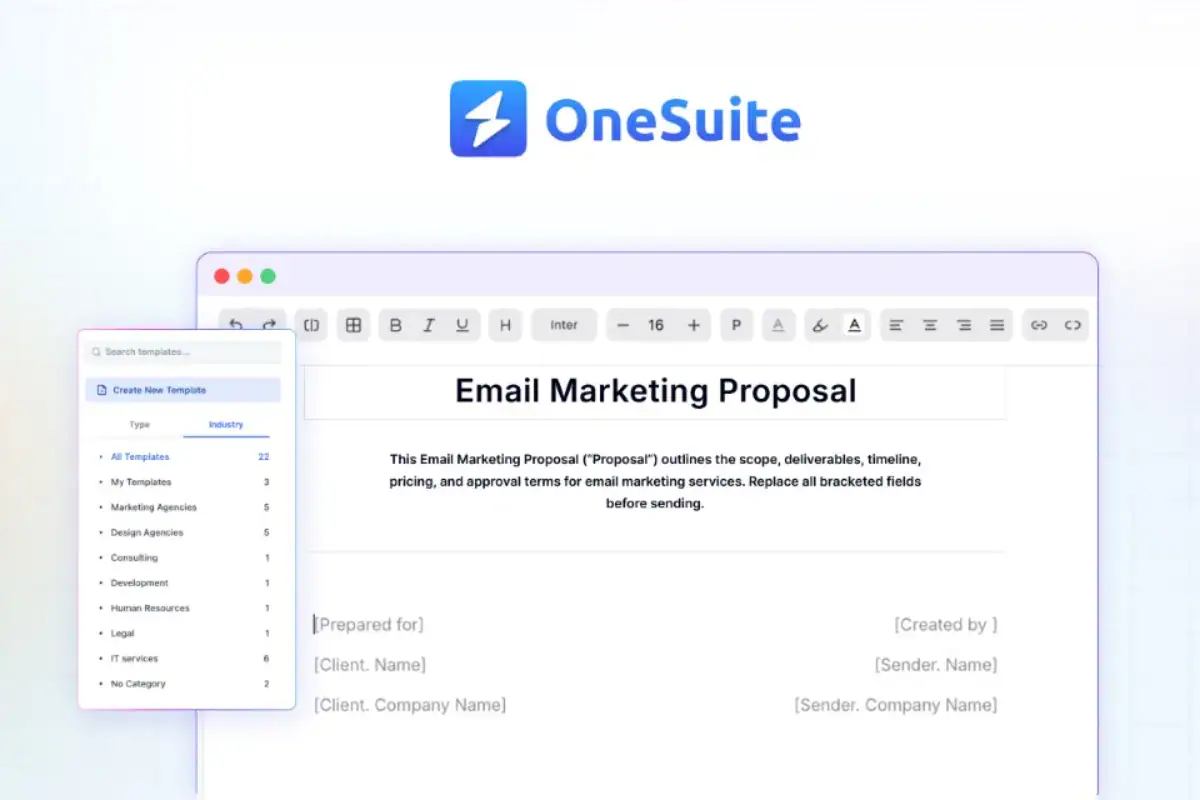
Free Email Marketing Proposal Template (With Examples)

Email marketing is a key part of digital marketing because it reaches people directly through their inbox.
It works best when the work starts with clear goals, clear scope, and clear reporting. Many deals get stuck because the client does not see a structured plan. They see tasks, but they do not see control.
A strong email marketing proposal template fixes that. It helps you present the work in a way clients can trust. It makes the scope easy to approve. It makes pricing easier to accept. It shows how results will be tracked.
This clarity reduces delays and increases the chance the client says yes.
Use the template below to turn your client meeting notes into a complete proposal.
Fill in the sections, send it for approval, and move the client from discussion to execution faster.
Key Takeaways
Download Your Free Email Marketing Proposal Template
Use this free template to define goals, scope, pricing, and KPIs, so you can send a client-ready proposal and get faster approvals.
What Is an Email Marketing Proposal?
An email marketing proposal is a formal document that explains how email campaigns will support a business goal. It aligns the marketer and the business on the target outcome, scope, timeline, and success metrics, such as sales or leads.
A proposal template keeps the work clear and professional. It sets expectations, reduces confusion, and helps deliver tasks on time.
Industry benchmarks for 2025 estimate email marketing ROI at $36–$42 for every $1 spent. This is a general benchmark, not a guarantee.
A clear proposal improves results and client satisfaction because it defines:
- goals and KPIs
- audience and messaging
- deliverables and schedule
- reporting and accountability
Step-by-Step: How to Write an Email Marketing Proposal
A strong email marketing proposal does two jobs. It proves you understand the client’s business. It also shows a clear plan the client can approve and track.

Step 1: Write a clear proposal cover note
Start with a short proposal letter that confirms what you discussed in the meeting. State the main goal, the scope you are proposing, and what the client will get from this document. Keep the tone professional and direct. This opening should reduce doubt and set expectations.
Step 2: Summarize the business, audience, and ICP
Write a short business snapshot based on what you learned. Define the Ideal Customer Profile in plain terms. Then list the key segments you will target. This section should explain who the emails are for and why those people matter to the business.
Step 3: Define objectives and KPIs
List the campaign objectives in a measurable way. Keep them tied to outcomes the client cares about, such as leads, conversions, retention, or reactivation. Add the KPIs you will track for each objective. This section turns email marketing into a performance plan, not a guess.
Step 4: Select a template and customize it for the client
Use a standard proposal template to keep the structure consistent. Replace every generic line with client-specific details from the meeting. Confirm scope, deliverables, timeline, and responsibilities. A clean structure speeds up approval and prevents scope confusion later.
Step 5: Present the strategy and content plan
Explain the email strategy in a simple flow. State what campaign types you will run and what each one achieves. Add a content plan that covers sequences, key messages, and sending frequency. Show how segmentation and personalization will be used, based on the audience groups you defined earlier.
Step 6: Add reporting, ROI tracking, timeline, and budget
Explain how often you will report and what will be included in each report. State how ROI is tracked using agreed metrics. Then provide a clear timeline for delivery and a pricing structure that matches the workload. This section should feel transparent and controlled.
Step 7: Close with next steps and approval
End with a clear approval process. State how the client signs off, what access you need, and what happens after approval. Include kickoff timing and the first delivery date. This reduces delays and makes the start of the project predictable.
OneSuite can support this workflow by keeping the proposal, approvals, follow-ups, and invoicing in one place.
What to Include in an Email Marketing Proposal
Before writing the proposal, assume you already met the client. You understand their business model, current email performance, and core problems. The proposal should reflect that understanding. It should feel specific to the client, not reusable for anyone else.
Each section below explains how to shape the content.
Cover Letter
Start the proposal with a short cover letter that confirms alignment. Use it to show that you listened during the meeting and that the proposal reflects those discussions.
Briefly restate the client’s main goal and the reason this proposal exists. Explain what the document covers and how it helps move from discussion to execution. Keep the tone clear and professional. Avoid selling language. The purpose is reassurance, not persuasion.
This section should make the client feel confident that the proposal is built for their situation.
Campaign Objectives
Write this section based on the client’s real email marketing problems. Do not use generic objectives.
Start by naming the issues discussed in the meeting. This may include low engagement, weak conversions, inconsistent campaigns, poor list quality, or lack of reporting clarity.
Then define what each campaign aims to improve. Tie every objective to a business outcome. Use clear, measurable goals. Each objective should answer one question: what problem does this campaign solve?
This section shows that email marketing is being used intentionally, not as a routine activity.
Target Audience & Buyer Segments
Use this section to prove you understand who the emails are for.
Define the client’s Ideal Customer Profile using real characteristics such as role, industry, intent level, or customer stage. Then break the list into clear segments. Separate leads, active customers, and inactive contacts when relevant.
Explain how leads are grouped and how messaging differs across segments. Focus on relevance and clarity. Avoid broad audience definitions.
This section should explain how segmentation improves engagement and reduces wasted sends.
Email Strategy Overview
This section explains how email marketing will be executed to support business goals. Write it based on research, past performance, and client inputs.
Include two or three core strategies only. Each strategy should serve a clear purpose.
Focus on:
- lifecycle email strategy for onboarding, retention, or re-engagement
- lead nurturing strategy to move prospects toward conversion
- promotional campaign strategy tied to offers, launches, or updates
Explain how these strategies work together and why they fit the client’s business model. Avoid listing tactics without context. The goal is clarity, not volume.
Content & Campaign Plan
This section shows how strategy becomes consistent action.
Explain how many email campaigns will run each month and the purpose of each type. Define how content supports different stages of the buyer journey.
Include:
- campaign types and sending frequency
- content goals for each campaign
- alignment with sales, product, or retention goals
Keep the focus on structure and consistency. This helps the client understand what will run, how often, and why it matters.
Automation & Tools Used
This section explains how email marketing stays efficient and scalable.
List the tools used for automation, delivery, segmentation, and reporting. Explain what each tool handles and how automation reduces manual work.
Cover:
- automated workflows and triggers
- list management and segmentation
- performance tracking and reporting
Show how tools improve accuracy, speed, and team productivity. Avoid naming tools without explaining their function.
Timeline & Deliverables
This section sets clear expectations for execution and delivery.
Break the work into phases instead of vague dates. Define what happens at each stage and what the client receives.
Include:
- setup and preparation phase
- campaign execution phase
- reporting and review checkpoints
Keep timelines realistic and easy to follow. This section should clearly answer when work happens and what will be delivered.
Budget & Pricing Structure
Use this section to make pricing easy to understand and easy to approve. Start by stating the pricing model you use, such as monthly retainer, fixed project fee, per-campaign pricing, or hourly billing. Then connect the price to the work.
Mention how many people will work on the project and what they handle. If you bill hourly, include estimated hours by work type, such as planning, writing, design, setup, testing, and optimization. If you offer a fixed fee, define what volume of work the client receives within that fee.
State what is included and what is not included. This prevents scope confusion later.
Reporting, Analytics & KPIs
Use this section to show how results will be tracked and shared. Start with the reporting schedule. State whether reports are weekly, monthly, or both.
List the KPIs you will track and connect them to the campaign objectives. Include metrics that reflect performance and list health, not just surface numbers. Explain what happens after each report. State how insights lead to changes, such as subject line testing, segment updates, timing changes, or content adjustments.
This section should make reporting feel like a decision tool, not a summary.
Next Steps & Approval Process
Use this section to move the client from “interested” to “approved” with clear steps. Confirm that scope, timeline, and deliverables are final. Then explain how approval works.
Use e-signature for sign-off and keep the process documented. After approval, list the immediate next actions. Include access collection, kickoff date, and the first deliverable timeline. Keep it simple and structured so the client knows what happens next.
Use OneSuite to keep the proposal, approvals, and follow-ups in one place. Store the proposal document, track client comments, confirm approvals, and keep every update visible.
This reduces delays and makes the handoff from proposal to execution smoother.
Create Email Marketing Proposals with OneSuite
Creating an email marketing proposal takes time, and slow proposals lose deals. OneSuite helps you move faster from client discussion to signed approval with a clear, organized workflow.
OneSuite is an all-in-one platform for managing proposals, client communication, documents, and invoicing in one place. It keeps every step visible, so you spend less time chasing updates and more time delivering work.
With the OneSuite Document Hub, you can create and send a complete email marketing proposal that includes the sections clients expect:
- goals and KPIs tied to business outcomes
- ICP and buyer segments with messaging focus
- email strategy and campaign plan
- automation and tools used
- timeline, deliverables, and pricing
- approval and e-signature
OneSuite helps you close leads faster because it supports the full approval process:
- reusable proposal templates for quick creation
- one link for the client to review and approve
- tracked comments, revisions, and final version control
- e-signature to confirm scope and start dates
- built-in invoicing to collect payment after approval
This keeps the proposal process clear and structured. It reduces delays, avoids scope confusion, and makes it easier for clients to say yes.
Get the email marketing proposal template in OneSuite and use it as your standard format for new client onboarding.
FAQs
How to estimate costs in an email marketing proposal?
Base costs on scope. Count campaigns, emails, and sequences. Add time for setup, writing, testing, and reporting. Match pricing to workload.
How detailed should an email marketing proposal be?
It should cover objectives, audience, strategy, deliverables, timeline, pricing, and reporting. Avoid unnecessary explanations or filler.
Can a proposal template help close clients faster?
Yes. A clear template reduces friction, speeds up review, and makes approval easier.
Find a Better Way to Grow
OneSuite streamlines projects, clients, and payments in one place, making growth hassle-free.