
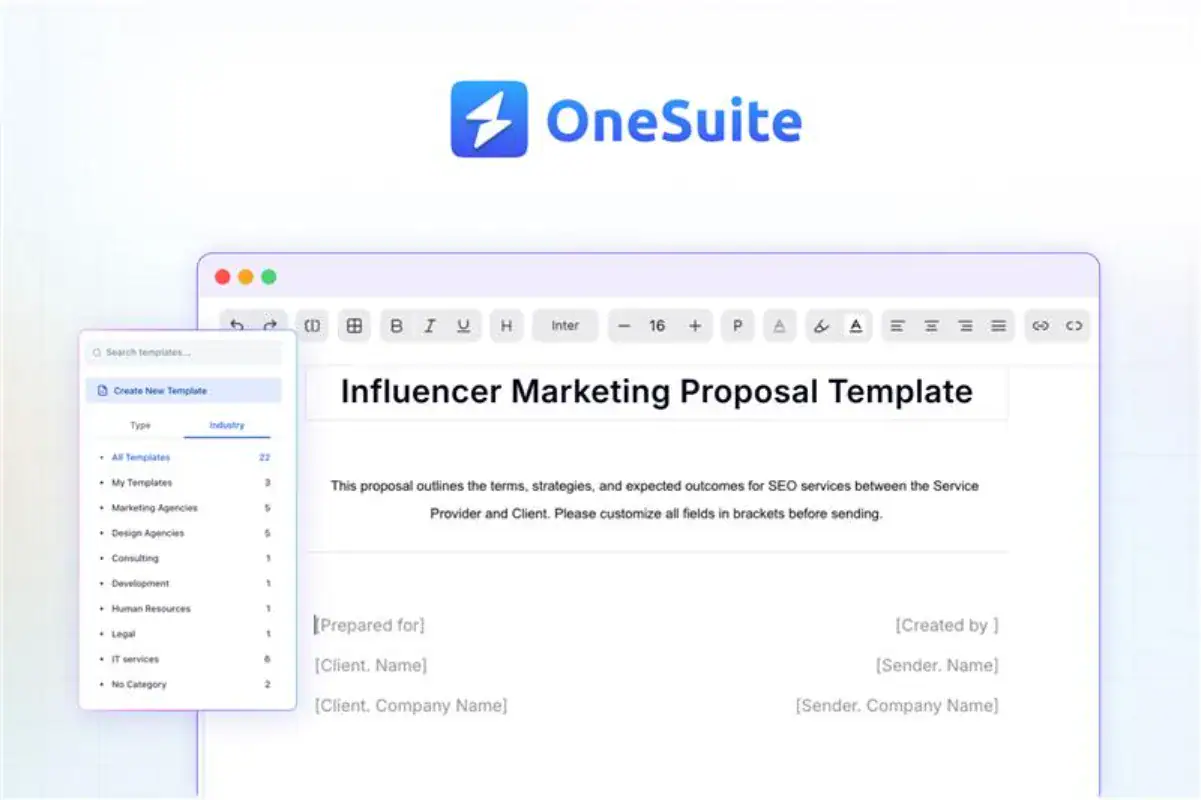
Free Influencer Marketing Proposal Template

Are you struggling with payment delays, miscommunication, or project confusion in your influencer marketing campaigns?
These common problems often arise when a clear proposal isn’t in place.
Without a structured influencer marketing proposal template, expectations can get lost, and projects may not run as smoothly as they should.
The influencer marketing proposal template is the solution to these challenges. It helps define clear goals, timelines, deliverables, and payment terms upfront, ensuring both parties are aligned and reducing misunderstandings.
Get started today with OneSuite’s free influencer marketing proposal template and make your next campaign a success from the very beginning.
Key Takeaways
Download Your Free Influencer Marketing Proposal Template
Looking for a professional, easy-to-use contractor proposal? Grab our free template now to simplify your project planning and ensure a smooth start.
What Is an Influencer Marketing Proposal?
An influencer marketing proposal is a formal document used by brands and influencers to align on the goals, strategies, deliverables, and payment terms of a marketing campaign.
It outlines the campaign’s objectives, content plan, target audience, and the influencer’s role in promoting the brand.
Both the influencer (or agency) and the brand sign the proposal to ensure mutual understanding and agreement on the terms.
Having a clear proposal template is essential for both parties. It includes the campaign strategy, timeline, expected deliverables, and compensation structure, ensuring transparency and smooth execution.
The proposal also helps set realistic expectations and goals, creating a foundation for a successful collaboration that benefits both the influencer and the brand.

How to Write an Influencer Marketing Proposal
When writing an Influencer proposal template, it’s crucial to approach the task with clarity, professionalism, and a clear understanding of both your brand and the influencer’s audience.
The goal is to create a document that not only outlines the specifics of the collaboration but also builds a compelling case for why this partnership is mutually beneficial.
The proposal should be structured and well-organized, showcasing your brand’s strengths, the influencer’s potential, and the shared vision for the campaign.

Step 1: Define Your Branding and Value Proposition
The first step in writing a great influencer proposal is to focus on branding. Branding is not just about what you do; it’s about how you present yourself in the marketplace.
From the beginning of the proposal, your branding should be front and center—use clean design, your brand colors, and a professional tone.
Start by introducing your brand with a few impactful sentences that highlight your unique value proposition. This could include your mission, core values, and what sets you apart from competitors. The influencer needs to immediately understand what your brand stands for and why it’s worth their time.
You should aim to catch their attention with a visually appealing proposal that reflects the quality of your brand and your commitment to the collaboration.
Step 2: Understand the Brand’s Goals and Needs
Understanding the brand’s needs is another vital aspect of crafting a well-rounded influencer proposal. It’s important to demonstrate that you have a deep understanding of the brand’s current market position, challenges, and competitors.
Researching the brand’s goals, recent product launches, and audience demographics will help you craft a proposal that speaks directly to their needs. This shows the brand that you’ve taken the time to understand their business and are invested in helping them achieve their goals.
Whether the brand is trying to raise awareness for a new product or increase engagement with their existing audience, it’s your job to connect the dots between their goals and your expertise as an influencer.
This section should address the brand’s challenges, and you should propose a strategy that leverages your unique strengths to solve those challenges.
Step 3: Showcase Previous Work and Case Studies
The third step is to highlight your previous work and case studies. Your past successes are powerful tools in convincing the brand that you can deliver results. Share specific examples of past campaigns you’ve worked on, focusing on measurable outcomes such as increased engagement rates, sales, or follower growth.
Don’t just list your past work; provide detailed results that demonstrate your impact. If possible, include testimonials from brands or partners you’ve worked with, or provide concrete data that shows how you’ve helped other brands achieve their goals.
This part of the proposal should be as detailed as necessary to give the brand confidence in your ability to execute and deliver on your promises.
Step 4: Craft a Tailored Strategy and Action Plan
Once you’ve established your credibility, the next step is to lay out your strategy and plan for the collaboration. This is where you propose how you will help the brand meet its objectives. The strategy should be tailored specifically to the brand’s goals and target audience.
Detail the type of content you plan to create (Instagram posts, Reels, stories, YouTube videos, etc.) and explain how this content will resonate with your audience and support the brand’s messaging.
You should break down your task plan into short-term and long-term goals, outlining the steps you’ll take to create content and engage with your audience over time.
Be clear about how your strategy will drive traffic, increase engagement, or achieve the brand’s other marketing objectives.
This section is where you can show your creativity and expertise by offering ideas that are unique to the brand’s needs and audience.
Step 5: Establish a Clear Timeline and Workflow
After outlining your strategy, it’s essential to define a clear timeline and workflow. This is crucial for managing expectations.
Your proposal should include a detailed timeline that outlines when you plan to create and post content, as well as when the brand can expect to review and approve that content.
Transparency about your workflow and delivery schedule will reassure the brand that you’re organized and capable of managing the project effectively.
Highlight key milestones such as content creation, content approval, and campaign launch dates. Setting clear deadlines and having a plan in place ensures that both you and the brand are aligned in terms of expectations.
Step 6: Define Success Metrics and Reporting
Next, success metrics and reporting play a key role in influencing the brand’s decision to collaborate. It’s important to define the metrics by which the success of the campaign will be measured.
Will you track engagement rates, sales, new followers, or website traffic?
Be specific about how you’ll measure success and provide a plan for regular reporting. This could involve weekly or monthly updates, a live dashboard, or detailed performance reports after the campaign ends.
By outlining these metrics, you demonstrate your commitment to accountability and show that you’re focused on delivering tangible results.
Step 7: Present a Clear Budget and Terms
Finally, a well-structured budget and terms and conditions section is necessary to set clear expectations around compensation, deliverables, and usage rights. It’s essential to be transparent about your rates and the overall cost of the collaboration.
Break down the budget into specific categories such as content creation, promotions, and any additional fees (e.g., for usage rights or paid media).
Define the payment terms, including deposit requirements and payment schedule, and clarify the content ownership—who owns the rights to the images or videos you create, and for how long the brand can use them.
Setting these terms upfront prevents any misunderstandings down the line and ensures that both parties are clear on what to expect.
Step 8: End with a Strong Call to Action (CTA)
The proposal should conclude with a strong call to action (CTA) that encourages the brand to take the next step. This could be scheduling a call, signing the agreement, or simply replying to the email to discuss the next steps.
Keep the CTA simple, direct, and actionable. Make it as easy as possible for the brand to say “yes” and move forward with the collaboration.
Essential Elements of a Proposal
When creating your proposal, it’s important to follow a clear structure and include all the necessary components to ensure professionalism and clarity.
Here’s a simple guide for you to follow while writing your proposal:
Cover Letter
The cover letter is the first thing your client will see, so make it count! Politely introduce the proposal and summarize the key points. Be concise but clear, and make sure to emphasize why you’re the perfect fit for the job. The cover letter sets the tone for the rest of the proposal, so make sure to highlight your value and briefly outline the solution you’re offering.

Overview
In the overview section, show that you’ve done your homework and understand the brand’s goals. It’s not just about what you can do, but about how your work will align with the client’s vision.
- Audience Demographics and Insights: Add insights about your audience, including demographics and engagement rates. Show how your audience aligns perfectly with the brand’s target customers.
- Add Social Media Links: Include links to your social media profiles or relevant platforms where clients can view your work, audience interactions, and previous campaigns.
Campaign Information
Clearly define the start and end dates for the campaign. Setting a timeline ensures that both you and the client are on the same page when it comes to project deadlines. It’s essential for managing expectations.
Strategy and Execution Plan
This is where you detail the step-by-step plan to bring your ideas to life. Explain how you’ll create and execute content, engage your audience, and manage project timelines. A solid strategy makes it easier for clients to visualize your approach and trust your expertise.
Case Study
Include 1-2 case studies or client testimonials that showcase your past work. These should highlight successful campaigns or projects you’ve completed, and the positive feedback you’ve received. It’s an opportunity to showcase your ability and reliability, which helps build trust with your client.
Deliverables and Timelines
Clearly outline the deliverables and milestones of the project. Make sure to define what the client can expect at each stage, and who will be involved in reviewing the work. This keeps everything on track and helps avoid any confusion about timelines and approvals.
Terms and Conditions
Be transparent about the terms and conditions. This section should include payment terms, project responsibilities, and client expectations. Make sure you’re protecting both yourself and your client by clearly defining these terms. It will help prevent misunderstandings and set clear boundaries for both parties.
Pricing
Lastly, be upfront about pricing. Break down your pricing structure and include what the client will receive at each stage of the project. If possible, offer tiered pricing options or detailed packages to give your client flexibility. Transparency is key in building trust and ensuring both sides are on the same page.
By including these elements in your proposal template, you’ll have a well-structured, professional proposal that communicates everything your client needs to know. It will also help you clearly define roles, expectations, and timelines, ensuring a smoother working relationship.
E-Signature
Once both parties agree on the terms of the influencer marketing campaign, the final step is to sign the proposal. The e-signature confirms mutual understanding of the scope, deliverables, timelines, payment terms, and other key details.
The process is quick, simple, and legally binding, ensuring no misunderstandings and setting both the Influencer/Agency and Brand up for a smooth collaboration.
With OneSuite, you can easily send, sign, and track your proposal through the integrated e-signature feature. After approval, you can promptly follow up with the client to finalize details and kick off the campaign.
Create an Influencer Proposal Fast with Onesuite
Now that you know how to write a proposal and understand what essential elements to include, it’s time to streamline the process.
Whether you’re winning a new client or completing a project, OneSuite simplifies the entire proposal workflow.
With just a few easy steps, you can select a proposal template, customize it to your needs, and send it for e-signature. You can even send follow-up emails to ensure your proposal is fully completed and approved.
OneSuite provides everything you need for seamless proposal creation, from start to finish. It’s perfect for agencies, freelancers, and solo professionals looking for an easy-to-use, affordable solution.
Want to see how it works?
Watch our full YouTube tutorial on using OneSuite for proposal templates.
Start today with a free 14-day trial and simplify your proposal process with OneSuite!
See why our platform is loved by thousands of users.
Find a Better Way to Grow
OneSuite streamlines projects, clients, and payments in one place, making growth hassle-free.