
Proposal vs Contract: Key Differences Every Business Should Know

Summarize with:


When you’re preparing to work with a new client, one question almost always comes up: should you send a proposal or a contract?
Both documents look similar at first glance, which is why many freelancers and business owners feel confused about which one to use next.
That confusion is normal , and this is exactly where many projects either move forward smoothly or start with unclear expectations.
Proposals are exciting because they help you win work.
In fact, industry data shows that the average RFP win rate is around 45%, which explains why proposals are used so heavily at the start of client conversations.
They allow you to present ideas, explain value, and start collaboration. But winning the work is only half the job, protecting the work is where contracts matter.
In this guide, you’ll learn the clear difference between proposals and contracts, when to use each one, and how they work together for new or ongoing clients.
What Is a Proposal?
A proposal is a professional document that you send to potential clients to present a solution to their problem. It details your approach, the steps you’ll take, the timeline for completion, and the cost.
The primary aim of a proposal is to convince the client to move forward with your offer, but it’s not a legally binding contract.
A strong proposal is essential for many reasons.
It shows that you understand the client’s needs and goals better than anyone else.
By structuring your solution clearly and logically, you demonstrate how you’ll meet those needs.
Your expertise and past successes should shine through, helping to build trust with the client.
Additionally, focusing on the value and results you provide justifies your pricing and strengthens your offer.
Lastly, a well-crafted proposal makes it easy for the client to take the next step, whether it’s approving your proposal or scheduling a follow-up meeting.
What is a Contract?
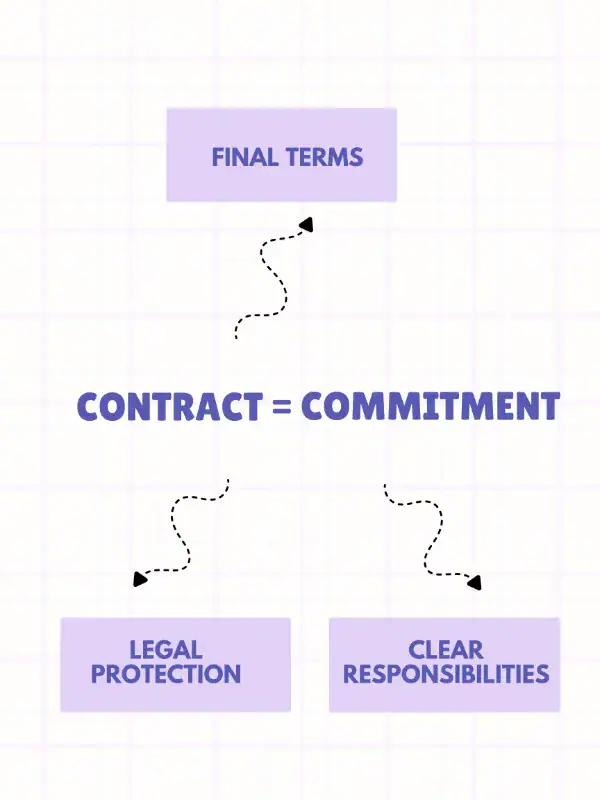
A contract is a legally binding agreement where two or more parties make promises to each other, and the law ensures those promises are kept. If one party fails to uphold their end, the law can step in to enforce the agreement or provide remedies.
Contracts are crucial because they:
- Protect Both Parties: Ensure mutual obligations are clear, with legal remedies available if either side breaches the agreement.
- Provide Clarity: Set clear terms and expectations, reducing misunderstandings and disputes.
- Are Enforceable: Written contracts can be enforced in court, offering protection if a verbal agreement is contested.
Key Differences Between a Proposal and a Contract
As an agency owner, understanding the distinction between a proposal and a contract is crucial when securing new clients and managing projects effectively.
Here’s a breakdown of their key differences, and why knowing which document to use at the right time can make all the difference for your business:
1. Purpose
- Proposal: Aimed at persuading the client and winning the project. It’s a sales document that explains your understanding of the client’s needs and how you plan to solve their problem.
- Contract: Formalizes the project and outlines the terms of the agreement. It’s a legal document that ensures both parties are clear on expectations, responsibilities, and what happens if something goes wrong.
2. Timing
- Proposal: Comes first, typically after initial discussions. It’s the “let’s see what you can do” stage.
- Contract: Follows after the client agrees to the proposal in principle. Once both sides have settled on scope and price, the contract is signed to make the agreement official.
3. Tone and Focus
- Proposal: Client-friendly and persuasive, with a focus on showcasing value and the benefits of your solution. It’s designed to win the client’s trust and business.
- Contract: Precise and formal, focusing on clear terms, obligations, rights, and risk management. It ensures both parties are protected.
4. Legal Status
- Proposal: Usually not legally binding unless explicitly stated. It’s more of an offer to begin negotiations.
- Contract: Legally binding; can be enforced by law if either party fails to uphold the terms.
5. Content Details
- Proposal: Includes an overview of the problem, proposed solution, rough timeline, pricing, and social proof (like portfolio or testimonials). It’s about making the case for why the client should work with you.
- Contract: Details the final scope of work, deliverables, timeline, payment terms, intellectual property ownership, confidentiality clauses, and termination clauses. It’s about outlining the legal specifics of the working relationship.
6. Flexibility
- Proposal: Flexible, as it’s still in the negotiation phase. Changes can be made based on feedback or client requests.
- Contract: Fixed once signed. Any changes to the contract typically require a formal amendment or change order.
Why It Matters for Your Business
As an agency owner.
Understanding when and why to use a proposal or contract can streamline your workflow and protect your business.
If you’re in fields like marketing, web design, consulting, or other service-based industries, knowing the roles of both documents is critical.
Whether you’re presenting a new service, setting expectations, or ensuring project success, a proposal gets you in the door, and a contract keeps everything legally secure once you’re inside.
Knowing when to transition from proposal to contract can make all the difference in how smoothly your projects progress and how well you protect your business interests.
How a Proposal Connects to a Contract
The process of turning a proposal into a contract is an important step in ensuring both parties are aligned and committed to the project.
Here’s how it typically works:
Stage 1 – Proposal
First, you send a proposal to the client, outlining your understanding of their needs, the solution you’ll provide, and the associated pricing. This document is persuasive, focusing on convincing the client to move forward with you, but it’s not legally binding.
Stage 2 – Discussion and Revision
The client reviews the proposal, asks questions, and may negotiate certain aspects like the scope or cost. This stage is where adjustments are made to ensure both parties are comfortable with the terms.
Stage 3 – Contract
Once you and the client agree on the main points, you formalize the arrangement into a contract. This is a legally binding document that specifies the final scope, pricing, timeline, and other terms. Once both sides sign, the project is officially set to begin.
You can summarize this process simply with the phrase:
“Proposal → Conversation → Contract → Project.”
By following this structure, you ensure that both you and your client have clear expectations and legal protection as you move forward with the work.
FAQs
Are e-signatures legally valid for contracts?
In most countries, yes—if identity, intent, and record integrity are clear. Using a proper e-sign tool helps you prove that.
What should always be in the contract (minimum)?
For agency work, don’t skip these:
Scope + deliverables, timeline, payment terms, revision limits, IP ownership, termination, confidentiality, dispute handling.
Is a proposal the same as a contract?
No. A proposal sells the work. A contract controls the work. A proposal explains what you plan to do and why. A contract makes it legally enforceable.
Can I edit the proposal “live” and have the client sign on the spot?
Yes—and it’s a great way to reduce delays. Just make sure the final signed version matches what you’ll later enforce in the contract/SOW.
Create Smart Proposals and Contracts with OneSuite
When a new client comes in, the first real question is simple:
Do you send a proposal, a contract, or both?
In most service businesses, a proposal helps you win the deal, but a contract helps you run the deal safely—especially when the work is ongoing.
As a freelancer and agency owner, I’ve seen clients ask this all the time:
“What do you prefer—proposal or contract?”
For quick, one-time projects, a proposal often works fine.
But for SEO retainers, digital marketing services, web design, and long-term monthly work, a clear contract is usually the better move. It locks in scope, timelines, payment terms, and responsibilities, so you avoid confusion later.
That’s where OneSuite helps.
With OneSuite, you can create professional proposals and contracts, collect e-signatures, and move from “approved” to “signed” without tool-hopping. It makes onboarding smoother, and it makes your process look more credible to clients.
After the client signs, OneSuite also supports day-to-day delivery with project management, client management, and CRM, so your whole workflow stays in one system—from first pitch to final delivery.
Find a Better Way to Grow
OneSuite streamlines projects, clients, and payments in one place, making growth hassle-free.