
How to Write a Retainer Agreement (with Template )

As an agency owner, choosing the right payment model for your clients can be overwhelming- hourly, monthly retainers, or project-based fees?
Each has its pros and cons, and figuring out what works best for both you and your clients can be a challenge.
If you’ve found yourself stuck between the flexibility of hourly rates, the predictability of monthly retainers, or the one-off simplicity of project pricing, you’re not alone.
The good news is: a retainer agreement can help simplify this decision.
With a retainer agreement, you secure ongoing work and steady income while providing clients with consistent access to your services. It’s the perfect solution for those seeking long-term relationships and financial stability.
In this article, we’ll walk you through everything you need to know about retainer agreements, including key features to include, and how to draft a retainer agreement that works for both you and your clients.
Key Takeaways
What is a Retainer Agreement?
A retainer agreement is a contract where a client makes an upfront payment for your services, ensuring you’re available to provide ongoing support or expertise over a set period. This payment is usually for future services, giving both you and the client stability and clarity.
For you as a service provider, this means predictable income, making it easier to manage your finances and plan ahead. It also reduces the risk of non-payment, since the client pays upfront.
For your clients, a retainer guarantees reliable access to your expertise whenever they need it, while also providing predictable costs for budgeting and planning.
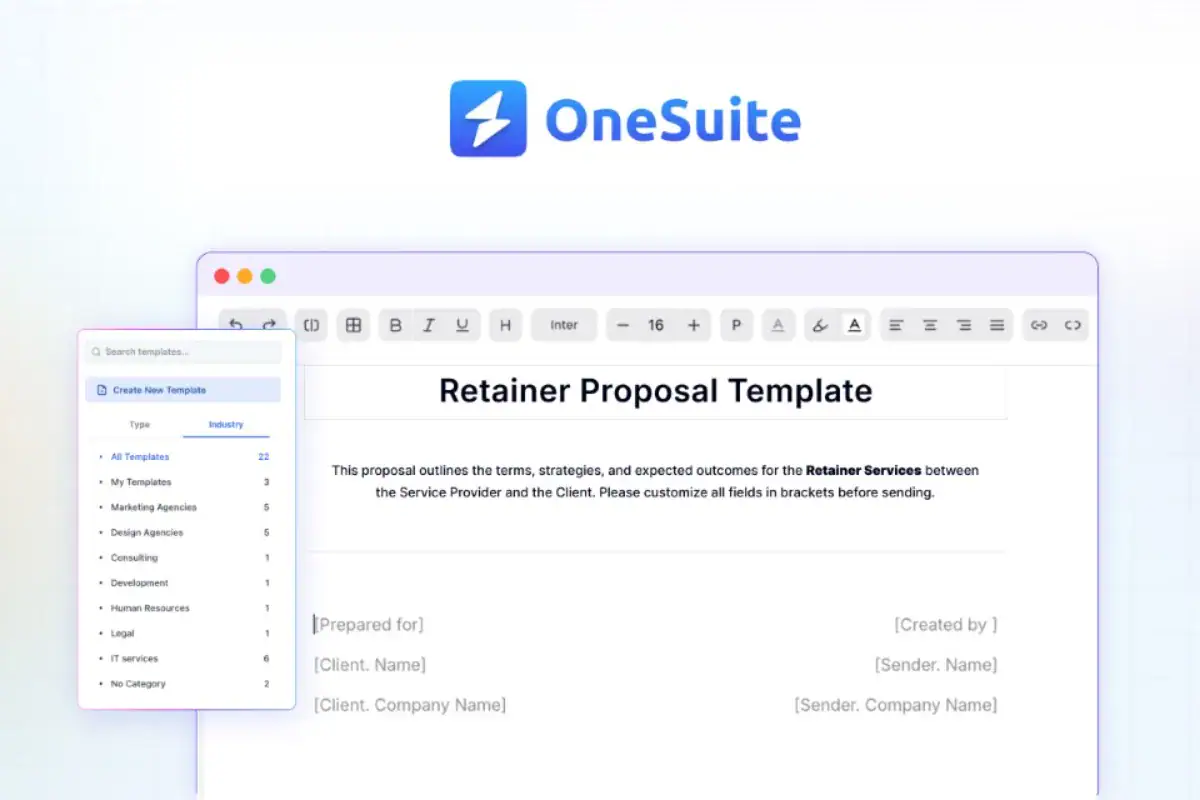
Download Your Free Retainer Agreement Template
Use this template to outline services, fees, and timelines for a clear, ongoing partnership with your client.
How to Write a Retainer Agreement: A Complete Guide
Once you’ve secured the client and agreed on the payment method, it’s time to put the retainer agreement in writing. This contract will define the terms of your ongoing partnership, ensuring both you and your client are clear on expectations, responsibilities, and services.
Let’s dive into the key elements to include in your retainer agreement template and take action.
1. Identifying the Parties
Start by clearly identifying all parties involved. List the service provider (your agency) and the client with their full legal names, company names, and addresses. Define the role of each party and outline responsibilities.
For example, your agency may provide marketing services, and the client will provide necessary resources. Be sure to include the date to establish the agreement’s start time.
Also, specify the number of team members involved. For instance, “Our agency, [Agency Name], located at [Address], will begin services for [Client Name] on [Start Date], with [X number] of team members, including project managers and designers.”
2. Service Scope and Deliverables:
Now, it’s time to clearly define the services included in the agreement. Be specific about what you’ll be providing to the client.
For example, if you’re offering content creation and social media management, your agreement should outline that your agency will be responsible for writing blog posts, designing graphics, and managing social media content.
The goal is to detail exactly what tasks you’ll be handling, so both you and the client know what’s expected. This could include anything from creating marketing copy to updating website content or providing monthly reports.
💡 See also: Free Scope of Work Template for Agencies, Freelancers & Teams
3. Fee Structure and Payment Terms
This section outlines the financial terms of the agreement. Clearly specify the retainer fee,
whether it’s monthly, quarterly, or annually, and detail the payment schedule.
Include the accepted payment methods (e.g., bank transfer, credit card, PayPal) and clarify whether the fee is refundable or non-refundable.
This ensures both parties agree on the payment structure and avoids any confusion later on.
4. Agreement Duration and Termination Conditions
Specify the start and end dates of the agreement. Outline the conditions for termination by either party, such as non-performance, and include the required notice period (e.g., 30 days).
Clearly state if there are any financial penalties for early termination and whether the retainer fee is refundable if the client cancels the agreement before completion.
5. Additional Work and Modifications
Describe how any additional work outside the original scope will be managed. Outline the process for approving extra work and how additional costs or extended timelines will be handled. This keeps both parties on the same page if the project scope changes.
6. Confidentiality and Privacy Terms
When working with clients, protecting their sensitive information is key. This part of the agreement ensures that anything shared with you stays confidential, both during and after the contract. You’ll want to reassure the client that your team will handle their business data and private details with the utmost care.
Be clear about how you’ll keep everything secure—whether it’s through data encryption, restricted access, or internal processes to ensure confidentiality. This builds trust and shows your commitment to safeguarding their business.
7. Dispute Resolution Process
Things don’t always go smoothly, and conflicts can arise. That’s why it’s important to have a dispute resolution process in place. This section outlines how any disagreements will be handled.
First, you’ll try to sort things out informally through mediation, where both parties work together to find a solution.
If that doesn’t work, you’ll move to arbitration or another method.
Having this process set in writing helps avoid misunderstandings and keeps both sides confident that there’s a fair and straightforward way to resolve any issues.
8. Agreement Confirmation and Signatures
This part of the agreement ensures both parties are on the same page. It requires each party to sign the contract, formally accepting the terms and making the agreement legally binding.
The signatures confirm that both you and the client are committed to the services, expectations, and responsibilities laid out in the agreement.
9. Other Relevant Terms
Here,
You’ll include any additional provisions needed to fully define the agreement. This could cover things like intellectual property rights (who owns the work you create), a force majeure clause (to address unexpected events like natural disasters), or the governing law (which jurisdiction applies if a dispute arises).
These extra terms ensure everything is covered and both parties are protected.
How OneSuite Optimizes Retainer Proposal Management
Getting started with OneSuite’s retainer proposal management is quick and easy.
Here’s how you can send your proposal in just a few minutes, all while keeping the process seamless for both you and your client.
Here’s how to get started:
- Free Sign-Up: First, sign up for OneSuite. Once you’re in, head to the document section and select your proposal template.
- Fill in the Gaps: Customize the template by adding your specific information. It’s quick and simple—just fill in the blanks.
- Review Before Sending: Always take a moment to review the full proposal to ensure everything is accurate and professional.
- Send for Signature: Once you’re satisfied, send the proposal to your client for signing.
- Follow-Up: If your client hasn’t responded, send a polite follow-up reminder to keep the process moving.
With OneSuite’s easy-to-use document system, you’re ready for your next project. Check out our proposal documentation and video guides for even more tips on how to optimize your workflow.
Final Thoughts
So, here’s the deal
OneSuite is a client portal software trusted by thousands of agencies for managing their business all in one place. From client onboarding to offboarding, OneSuite has you covered. Don’t just take our word for it, check out the glowing reviews from our users on G2 and watch their video testimonials.
Once your retainer proposal is approved, you’ll get even more value from OneSuite. With features like time tracking, timesheets and productized services, you’ll streamline your workflow even more.
Want to see how it all works? Get a demo from our founder and stay tuned for our next update!
Common Questions About Retainer Agreements
What are the types of retainer agreements?
Paid-in-Advance Retainer: Client pays upfront for services.
Monthly Recurring Retainer: Client pays a fixed monthly fee for ongoing services.
Retainer for a Specific Scope of Work: Fixed project with defined deliverables.
General Retainer: Secures the availability of the provider, no specific tasks tied.
Can I customize the proposal template in OneSuite?
Absolutely! OneSuite’s proposal templates are fully customizable. Simply add your information, tweak the sections as needed, and you’re good to go. No more starting from scratch!
What happens after I send the retainer proposal to my client?
Once you send your proposal to your client, they can review and sign it directly through OneSuite. If there are no immediate responses, you can easily send a follow-up reminder to ensure things stay on track.
Find a Better Way to Grow
OneSuite streamlines projects, clients, and payments in one place, making growth hassle-free.