
Free Employee Contract Template: Create a Simple Work Agreement Online

June 16, 2026
An employment contract is more than a legal document—it is the foundation of trust, clarity, and protection between a business and its employees.
Without a properly structured contract, misunderstandings about salary, responsibilities, working hours, and termination terms can quickly lead to disputes and legal risk.
This guide explains everything you need to know about employee contracts and shows exactly what a professional template should include.
Download Your Free OneSuite Employee Contract Template
Before we dive in—if you’re here for the contract, go ahead and grab it now:
⚠️ Disclaimer: I’m not a lawyer, and this isn’t legal advice. Always speak to a qualified attorney when drafting contracts.
What Is an Employee Contract Template?
An employee contract template is a legal agreement between a company (often a founder, manager, or HR representative) and a new employee.
It serves as the foundation of the working relationship by clearly outlining:
- Responsibilities of the employee
- Company policies and office rules
- Expectations from the employee
- What the employee can expect from the company
Using a contract template speeds up and improves consistency. Instead of creating a new agreement from scratch each time, businesses can customize a reliable framework that covers the essential terms of employment.
This approach protects the employer and the employee, reduces the risk of misunderstandings, and ensures that the working relationship begins with clarity and trust.
Now we will discuss the essential elements included in the OneSuite employee contract template.
Types of Employment Contracts
Employment contracts vary to suit workforce needs and business goals. Each type defines roles, responsibilities, duration, and legal protections, helping employers choose the right agreement for each situation.
Permanent (Full-Time and Part-Time)
Permanent contracts are the most common form of employment, covering around 60 % of the U.S. workforce according to McKinsey. They have no fixed end date and can be full-time or part-time. Full-time employees usually work thirty-five to forty hours weekly, while part-time employees work fewer hours with prorated benefits.
In many cases, these contracts are “at-will,” allowing either party to end the agreement, subject to legal restrictions.
Temporary or Fixed-Term
Temporary and fixed-term contracts specify a clear end date or project completion. They are often used for seasonal work, maternity cover, or project-based roles. Fixed-term contracts may offer benefits similar to permanent ones but expire automatically unless renewed, while temporary contracts arranged by agencies usually provide limited stability and benefits.
Freelance and Independent Contractor
Freelancers and independent contractors represent a growing share of the workforce, with McKinsey reporting 36% percent of Americans working independently in 2022. These contracts set out scope of work, deadlines, and payment terms but exclude employee benefits. Contractors manage their own taxes and expenses, offering businesses flexibility while requiring careful compliance to avoid misclassification.
Internship and Probationary
Internship contracts are short-term and focus on training and experience, often for students or new graduates. Benefits are limited, and pay depends on local laws. Probationary contracts apply to new hires on a trial basis, allowing employers to assess performance before confirming a permanent role. These contracts include defined duration, criteria, and flexible termination terms.
Why You Need an Employment Contract
An employment contract is not just paperwork; it is the foundation of a professional relationship. By putting terms in writing, it protects both sides, reduces risks, and creates long-term stability.
Key reasons why it matters:

⚡️ See Also: How to Write a Contract Agreement: A Simple Step-by-Step Guide
What Should an Employment Contract Include?
An employee contract template is designed to simplify formalising the relationship between a company and its employees.
It provides a clear framework that captures the essential employment details, helping both parties understand their obligations and entitlements from the beginning.
A well-prepared contract typically covers the employee’s role and responsibilities, the structure of compensation, the expected working hours, leave entitlements, benefits, termination rules, and protective clauses relating to confidentiality and intellectual property.
Businesses can avoid unnecessary disputes and ensure a transparent working arrangement by addressing these areas.
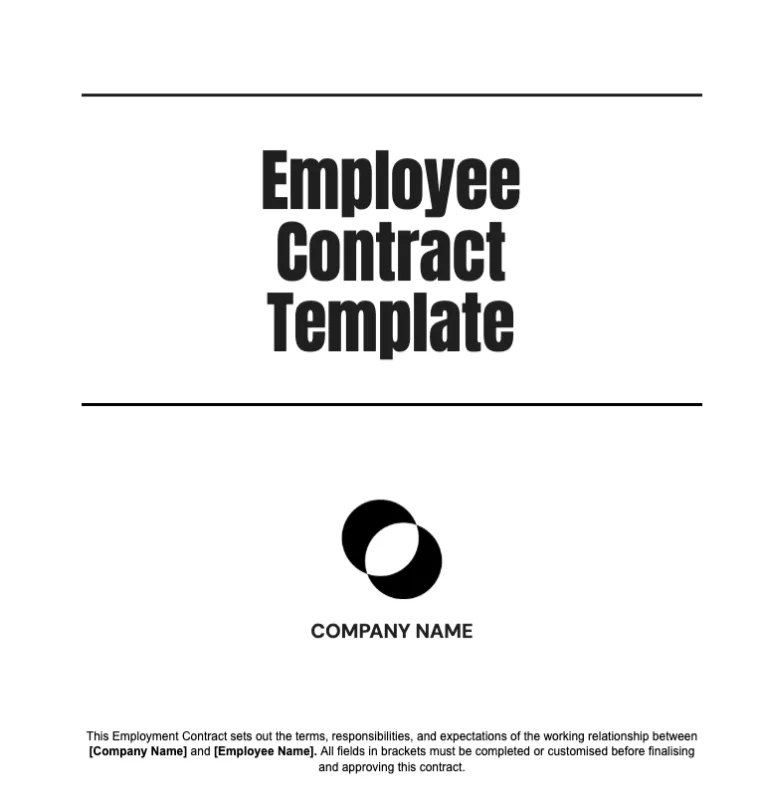
OneSuite’s free employee contract template combines all these crucial elements in a single, easy-to-use format.
Employers can quickly customise the document with company details, role-specific requirements, and additional clauses, ensuring every agreement is consistent, professional, and reliable.
Job Details and Title
The starting point of every employment contract is the definition of the role itself. Job details and the official title provide clarity by specifying responsibilities, reporting lines, and scope of authority. Without this precision, employees may be uncertain about what is expected of them. This uncertainty can cause confusion and reduce productivity.
For example, the distinction between a Marketing Executive and a Marketing Manager lies not only in title but also in accountability. While one may focus on executing campaigns, the other directs overall strategy and supervises a team.
Research by the Society for Human Resource Management has shown that more than forty percent of workplace disputes originate from unclear role expectations, underlining the importance of well-defined job details.
Compensation and Payment Terms
Turning to compensation, this is often the first section employees review—and for good reason. The contract should state the exact salary or hourly rate, the frequency of payments, and any potential bonuses or commission structures. Transparency in this area builds trust and prevents conflict.
Disputes over pay are among the most common employment conflicts. The United States Department of Labor records thousands of cases related to wage and hour violations each year, which demonstrates the need for explicit payment terms. A contract that clearly outlines compensation protects the organisation and reassures employees of fairness.
Work Hours and Schedule
Work hours and schedules must be set out with equal clarity. This section should specify expected weekly hours, overtime arrangements, and whether the role is office-based, remote, or hybrid. Establishing this structure at the outset prevents disagreements about availability and workload.
More than 60% of companies now favour hybrid work models, according to a recent Owl Labs study. Clear contractual language ensures that organisations can embrace flexible arrangements while maintaining accountability.
Benefits and Leave Entitlement
Employee benefits strongly influence retention and job satisfaction. This section should cover annual leave, sick leave, parental leave, health insurance, pension contributions, and wellness programs.
Clearly communicating benefits within the contract signals fairness and provides employees with security in their roles.
Glassdoor research confirms that compensation is the leading factor in job choice, while benefits and perks are the second most influential consideration. A well-drafted benefits clause demonstrates organisational commitment to employee well-being.
Termination and Notice Period
Although few wish to focus on endings at the start of employment, termination provisions are essential. This section should outline grounds for termination, the notice period required from both sides, and any severance arrangements.
By addressing these matters from the outset, organisations reduce legal risk and employees gain confidence in their rights.
Disputes over notice periods frequently escalate into legal claims and strained relationships. A transparent termination clause minimises such risks and allows departures to take place professionally.
Confidentiality and Intellectual Property Rights
Modern organisations thrive on intellectual assets, data, and proprietary knowledge. Confidentiality clauses ensure employees do not disclose sensitive information, while intellectual property provisions clarify that work created in the course of employment remains the property of the organisation.
Legal history has shown how costly it can be when such clauses are absent. In one well-documented case, a departing employee attempted to claim ownership of software developed during their tenure, resulting in years of litigation.
Including clear confidentiality and intellectual property provisions in the contract helps avoid costly conflicts and safeguards the organisation’s critical assets.
Non-Compete and Non-Solicitation Clauses
Non-compete and non-solicitation clauses are designed to protect the company’s interests after an employee leaves. A non-compete restricts the employee from working for a direct competitor or starting a competing business for a defined period.
A non-solicitation prevents the former employee from approaching clients, customers, or colleagues to move them away from the company. These clauses are especially important in industries where relationships and trade secrets have significant value, and they ensure that the company’s hard-earned assets remain protected.
Restrictions After Termination
An employment contract should clearly outline what obligations remain after the working relationship ends. Common examples include the return of company property, continued confidentiality of sensitive information, and compliance with non-compete or non-solicitation clauses.
Setting these terms in advance avoids confusion and helps both parties maintain a professional relationship even after employment has ended.
Dispute Resolution
Even with a detailed contract, disagreements can occur. A dispute resolution clause explains how such conflicts will be handled, whether through mediation, arbitration, or legal proceedings in court. This not only provides fairness but also saves time and cost by giving both parties a clear process to follow.
Including this provision reassures employees that issues will be addressed transparently and helps organisations manage conflicts efficiently.
Governing Law
Every employment contract should identify the governing law that applies. This determines which legal system will interpret and enforce the agreement if disputes arise. For businesses, this clause avoids unnecessary complications by ensuring certainty and consistency.
For employees, it clarifies their rights under the contract. Stating the governing law is therefore a small but essential element that strengthens the agreement.
Signatures
The final section of the contract is the signature block. Both employer and employee must sign and date the document for it to be legally binding. Signatures confirm that both parties agree to the terms outlined and are ready to begin the working relationship on a solid foundation.
With OneSuite, this process becomes faster and more professional through digital signing, allowing agreements to be completed securely and stored for future reference

How to Customize an Employee Contract with OneSuite
Customising an employee contract in OneSuite is straightforward and efficient. The platform allows you to draft, edit, and finalise agreements without the hassle of manual paperwork. Every step is designed to ensure clarity, professionalism, and legal reliability.
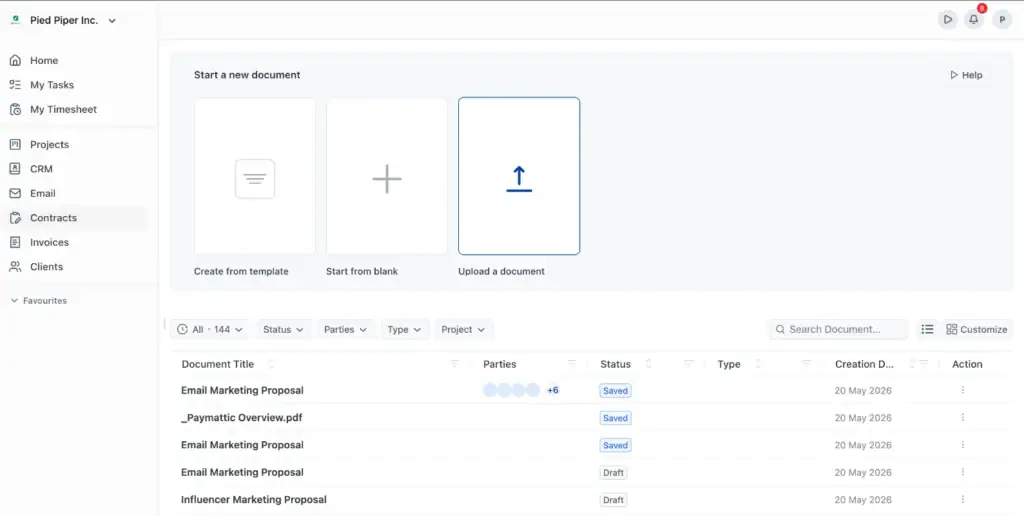
Here’s how you can create and customise your employee contract:
- Write Your Contract – Use OneSuite’s built-in editor to create a clear and structured contract that outlines job details, responsibilities, compensation, working hours, and benefits.
- Upload Existing Documents – If you already have a contract prepared, simply upload it to the Documents section for quick processing.
- Add Signature Fields – Insert signature and date fields for both the employer and the employee to confirm agreement.
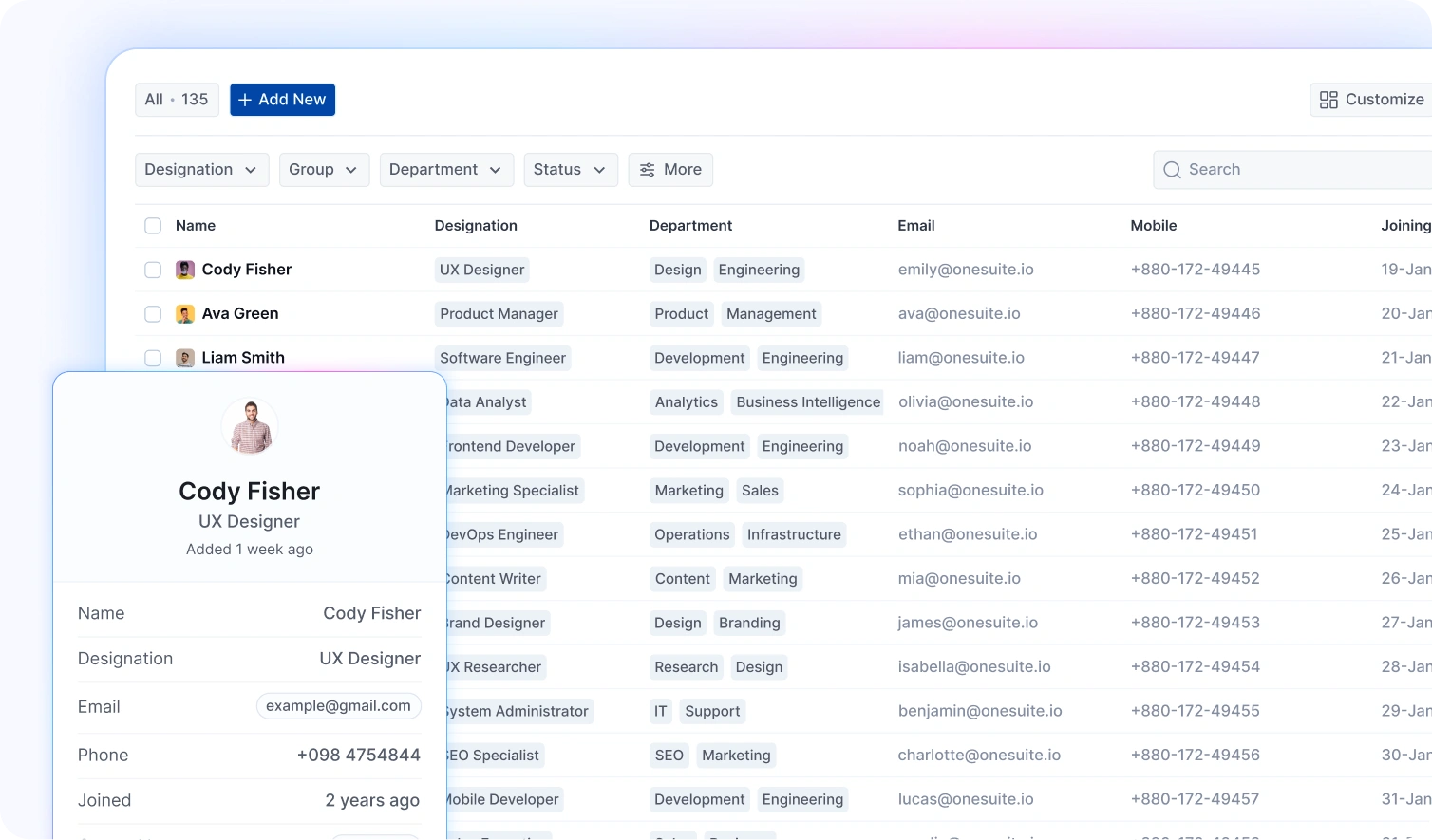
- Link to Employee Profile – Attach the contract directly to the employee’s profile for seamless record-keeping and easy access.
- Send for Signature – Share the contract via a secure link so the employee can review and sign online.
- Automatic Locking – Once signed, the contract is locked automatically, providing a legally verified and tamper-proof document.
- Save as a Template – Save the contract as a reusable template so future agreements can be prepared in minutes.
With these steps, OneSuite makes it simple to customise employee contracts while ensuring compliance and professionalism. This process saves time, reduces errors, and gives both employers and employees confidence that every agreement is accurate and secure.
FAQs on Employee Contracts
Can I create an employment contract online for free?
Yes. You can use a free employee contract template to create a basic agreement online. Just add the job details, salary, work hours, benefits, and signatures.
What is a one-page employment contract?
A one-page employment contract is a short agreement that includes the most important job terms, such as role, pay, schedule, start date, notice period, and signatures.
What should an employee contract include?
It should include job title, responsibilities, salary, payment schedule, working hours, benefits, leave, confidentiality, termination terms, and signatures.
Is an employee contract template customizable?
Yes. A good employee contract template should be easy to edit based on the employee role, contract type, company policy, and local employment rules.
Who needs an employee contract template?
Small businesses, agencies, startups, HR generalists, HR coordinators, and business owners can use employee contract templates when hiring new employees.
Why do I need an employment contract?
It clearly defines job roles, salary, and expectations to avoid misunderstandings.
𝌋 Access more professional templates :
Start exploring OneSuite today
No credit card is required